
Milk and Egg Custard
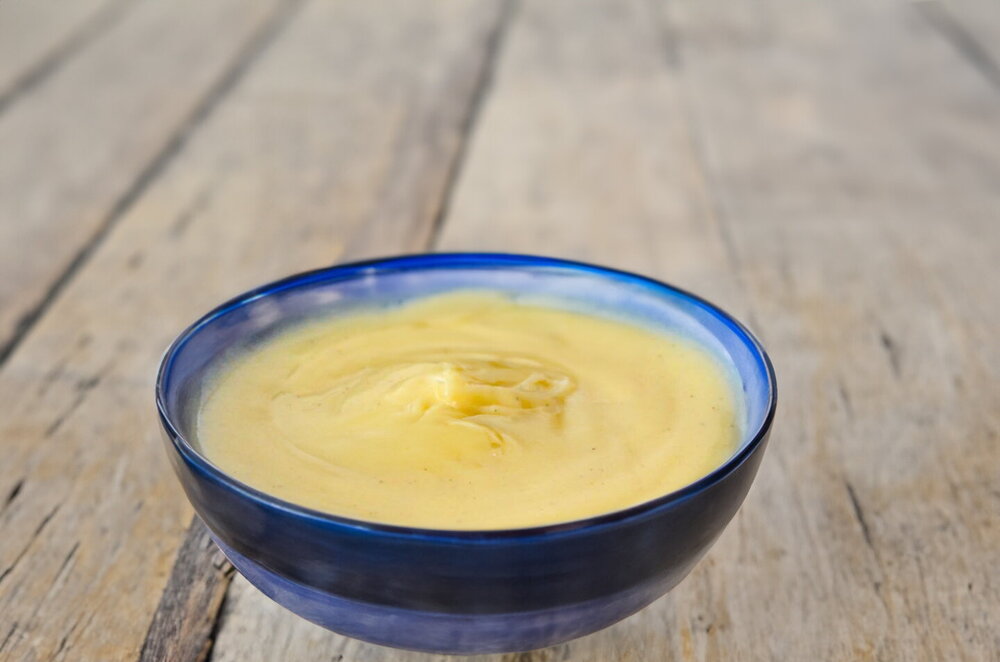
Delicate, melt-in-your-mouth, and made from the simplest ingredients. Milk and Egg Custard is a classic recipe. It is used to layer Napoleon and honey cake, fill éclairs and pastry horns, and make ice cream and many other desserts. Custard is very easy to prepare if you follow a few important rules.
Updated : 01 July, 2026
Easy
About 20 min.
Ingredients
500 milliliters
Milk
2
Eggs
3 tablespoon
Wheat flour
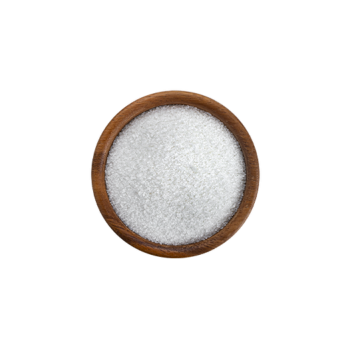
170 grams
Sugar
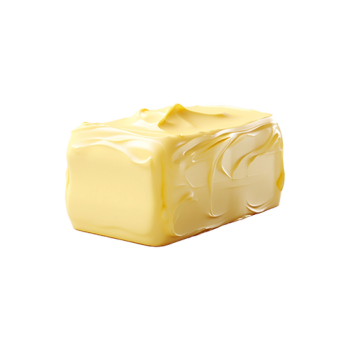
100 grams
Butter
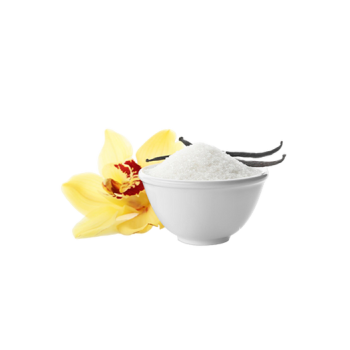
1 teaspoon
Vanilla sugar
Table
Table of volume measurements:
- teaspoon - 5 ml
- dessert spoon - 10 ml
- tablespoon - 20 ml
- glass - 200 ml
Preparation
Step 1
How do you make milk and egg custard? Prepare the ingredients. You can use milk of any fat content, it is not essential. I used large eggs. The amount of sugar can vary to taste, from 150 to 200 grams. I chose the middle amount, 170 grams. It is better if the butter is soft, so take it out of the refrigerator in advance.
Step 2
Take a saucepan with a heavy bottom. This is important, because a lot in this recipe depends on the choice of cookware. In a heavy-bottomed saucepan, you can safely cook the cream directly on the stove, while an ordinary pan should be placed over a double boiler so the mixture does not burn or turn into scrambled eggs. Crack the eggs into the saucepan, add the regular sugar and vanilla sugar, then add the flour. Whisk all the ingredients until smooth.
Step 3
Pour in the milk in a thin stream, whisking constantly. It will combine with the other ingredients fairly quickly. By pouring the liquid into a thicker mixture, you will avoid lumps.
Step 4
Place the saucepan with the milk mixture over low heat. Cook the cream without leaving the stove and whisk the mixture constantly. This is important, because otherwise the bottom layer will heat up faster and more strongly, and the eggs will curdle, so you will get scrambled eggs instead of custard. With constant stirring, all the layers of the cream heat evenly.
Step 5
Quite quickly, the mixture will begin to thicken, more and more with each passing minute. You need to wait until it comes to a boil. Large bubbles will appear on the surface, and it will begin to puff.
Step 6
As soon as that happens, turn off the heat immediately. Leave the saucepan with the cream to cool. From time to time, come back and whisk the cream so a film does not form on top.
Step 7
Cool the cream until warm. It should be at a temperature where a finger dipped into it feels pleasantly warm, but not hot. Add the butter to the cream. If the cream is too hot, the butter will melt too much, and if it is cold, the butter will not melt at all. Our goal is to gently incorporate the butter into the cream until it dissolves completely.
Step 8
The finished cream will be completely smooth, glossy, and uniform. Before using it, chill it well. To prevent a thick skin from forming on the cream, cover it with plastic wrap so that the wrap lies directly on the surface. Put the cream in the refrigerator for a couple of hours, then use it as needed.
Author note
Share the recipe


