
Waakye Toppings Bible: How to Build the Perfect Plate
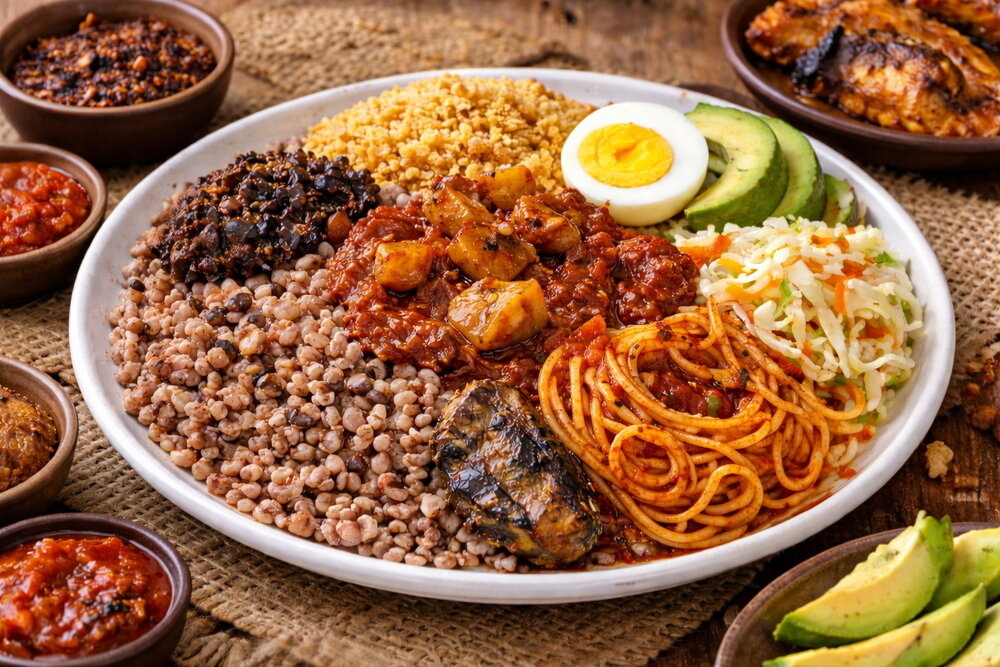
Waakye is a choose-your-own-adventure meal. The base is rice + beans, but the plate becomes legendary when you balance:
-
Soft + crunchy (waakye + gari)
-
Rich + bright (stew/shito + salad/onion)
-
Heat + cooling (pepper + avocado/egg)
-
Sauce + structure (spaghetti + stew so the plate isn’t “dry”)
Here’s how to build a waakye plate that tastes like the best vendor version—every time.
Step 1: Nail the base (so everything else shines)
Best rice-to-beans ratio
-
Classic comfort: 2 parts rice : 1 part beans
-
More protein / “heavier” plate: 1:1
-
Softer texture: slightly more rice, beans fully tender
Beans choice (all work)
-
Black-eyed peas: most common and quick-cooking
-
Cowpeas/beans: deeper taste, slightly firmer
-
Kidney beans: works, but different vibe (stronger flavor)
The “waakye color” tip
If you have waakye leaves (sorghum leaves), use them—best flavor + color. If not, you can still cook delicious rice-and-beans and let the toppings do the magic.
Step 2: Pick your “wet” element (the sauce that binds the plate)
A perfect waakye plate usually needs one main sauce, plus optional shito on the side.
A) Waakye stew (the classic red sauce)
Quick version: fry onions in oil → add tomato paste → add blended tomatoes/pepper → simmer until thick, glossy, and not raw.
What it does: makes the plate juicy, ties rice + spaghetti together.
B) Shito (the power spoon)
Best use: on the side, so everyone controls heat.
What it does: smoke + heat + umami, instantly upgrades plain bites.
C) Pepper/onion mix (fresh bite)
Chopped onions + pepper + pinch of salt (optional splash of vinegar).
What it does: cuts heaviness, makes every mouthful pop.
Step 3: The toppings bible (what each one adds + how to use it)
1) Shito
Adds: smoky heat, deep umami
How to use: 1–2 teaspoons on the side; add more as you eat
Pro tip: a little goes far—too much can overpower the stew
2) Gari
Adds: crunch, light sourness, “dry-to-perfect” balance
How to use: sprinkle last so it stays crisp
Pro tip: put gari on one side of the plate, not buried under stew
3) Wele (cow skin)
Adds: chewy texture + “street food” authenticity
Best method: boil until tender with onion/ginger/garlic + salt, then toss in stew or lightly fry before serving
Pro tip: wele is best when it’s tender, not rubbery—give it time
4) Egg
Adds: richness, protein, “calms” pepper
How to use: boiled egg halves (or a fried egg if you’re feeling fancy)
Pro tip: salt the egg lightly—small detail, big difference
5) Spaghetti
Adds: volume, structure, sauce-carrying power
How to serve: plain boiled spaghetti topped with waakye stew (or lightly tossed in stew)
Pro tip: don’t overcook—soft spaghetti turns the whole plate mushy
6) Salad (cabbage/carrot/onion)
Adds: crunch + freshness
How to serve: small mound on the side
Pro tip: keep it lightly dressed (or undressed) so it doesn’t water the plate
7) Protein toppings (choose 1–2)
-
Fish (fried or grilled): clean, satisfying, pairs perfectly with shito
-
Beef / goat / chicken stew pieces: hearty, “full plate” energy
-
Gizzard: chewy and bold—great with extra pepper
Pro tip: if your protein is dry, it MUST meet stew or shito.
8) Extras people love
-
Avocado: creamy cooling for spicy plates
-
Fried plantain (if available): sweet contrast
-
Kpakpo shito/green pepper sauce: bright heat alternative to dark shito
Step 4: Build the perfect plate (layering matters)
-
Waakye base first (spread it so it’s not a mountain)
-
Spaghetti next (one side of the plate)
-
Waakye stew over spaghetti (and a little over rice)
-
Add proteins (wele + fish/meat)
-
Add fresh (salad + onions/pepper)
-
Finish with gari (last!)
-
Shito on the side (control the heat as you eat)
Rule of thumb: every plate needs one “wet” (stew or shito) and one “fresh/crunch” (gari or salad/onion).
8 “perfect plate” combos (copy these)
-
The Classic Vendor Plate
Waakye + spaghetti + stew + wele + egg + gari + shito -
The Spicy-Head Plate
Waakye + stew + extra shito + pepper/onion mix + fish + gari -
The Balanced Plate
Waakye + stew + egg + salad + avocado + small shito -
The Budget Plate
Waakye + stew + egg + gari + pepper/onion (skip meat, still satisfying) -
The Protein Plate
Waakye (1:1 ratio) + wele + fish + egg + stew (light gari) -
The Crunch Plate
Waakye + salad + extra gari + onions + moderate stew + small shito -
The “No-Mess” Takeaway Plate
Waakye + spaghetti tossed in stew + egg + wele (gari packed separately) -
The Mild Plate
Waakye + stew (no pepper) + egg + avocado + salad (shito optional)
Common mistakes (and quick fixes)
-
Plate tastes dry: add more stew OR a teaspoon of shito (don’t suffer)
-
Everything is mushy: spaghetti overcooked or too much stew mixed in—keep toppings on the side, layer instead
-
Too spicy: egg + avocado + extra waakye (and keep shito separate next time)
-
Too oily/heavy: add salad/onion + a squeeze of lime/vinegar to brighten