
Tomatoes: Fresh vs Canned vs Paste (What to Use When — and Why It Matters)
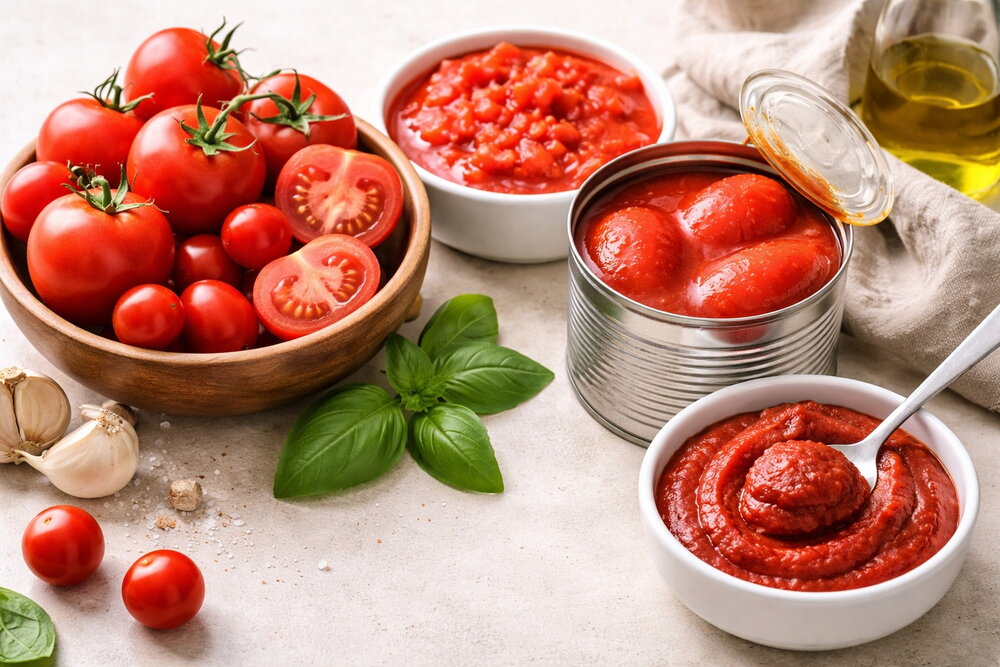
Tomatoes are sneaky. The wrong type can give you:
- watery sauce
- dull flavor
- or that “raw tomato” taste that won’t go away
The right type makes food taste like you cooked for hours.
Here’s the simple guide to fresh vs canned vs paste, what each one is best at, and the exact swaps to use when you only have one.
The quick answer
- Fresh tomatoes: best when you want bright, juicy, fresh flavor (salads, quick pan sauces, roasting).
- Canned tomatoes: best when you want consistent, deep tomato flavor (stews, long simmer sauces, soups).
- Tomato paste: best when you want concentrated umami + color (almost any savory tomato dish).
Think of tomatoes like this
Fresh = “freshness”
Aromatics, texture, acidity, juicy bite.
Canned = “reliable sauce power”
Picked ripe, processed quickly, consistent year-round.
Paste = “tomato MSG”
Concentrated flavor that boosts everything in small amounts.
Fresh Tomatoes: When they win
Best uses for fresh tomatoes
1) Raw or barely cooked dishes
- salads, sandwiches, salsas, bruschetta
- quick tomato toppings
- pico-style mixes
Why: fresh tomatoes bring crisp texture and brightness.
2) Roasting
Roasted tomatoes become sweet and jammy.
- sheet-pan tomatoes
- blistered cherry tomatoes for pasta
- tomato confit vibes
Why: roasting drives off water and concentrates flavor.
3) Fast pan sauces (when tomatoes are ripe)
If tomatoes are truly ripe, you can make a 10–15 min sauce.
Rule: if your tomatoes taste bland raw, they’ll taste bland cooked.
Best fresh tomato types for cooking
- Cherry/grape: naturally sweet, low water, great for quick sauces
- Roma/plum: meatier, less watery, good for salsa + cooking
- Big slicing tomatoes: best raw; can be watery for sauce unless roasted
Canned Tomatoes: When they’re better than fresh
Best uses for canned tomatoes
1) Long-simmer sauces and stews
- bolognese
- chili
- tomato-based curries
- hearty soups
Why: canned tomatoes are usually processed at peak ripeness and give consistent flavor.
2) Smooth, red sauces
If you want that “restaurant red sauce” vibe: canned is your friend.
3) When fresh tomatoes are out of season
This is most of the year in many places.
Which canned tomato should you buy/use?
- Whole peeled: most versatile; crush by hand for best texture
- Crushed: easiest for quick sauce
- Diced: best for chunky soups/stews, but sometimes treated to hold shape (can stay firmer)
- Passata/purée: smooth and fast (great for pizza sauce and quick simmer)
Pro tip: whole peeled often gives the best flavor/value; you control the texture.
Tomato Paste: What it’s actually for (and how to use it)
Tomato paste isn’t “tomato sauce.” It’s a flavor concentrate.
What paste does
- deepens color (richer red)
- adds umami and sweetness
- makes sauces taste “cooked” faster
The #1 tomato paste trick: fry it
Add paste to hot oil/onions and cook 1–2 minutes until it darkens slightly.
Why: it removes the raw, metallic taste and unlocks sweetness.
When to use paste
- stews, soups, chili
- jollof-style bases
- quick pan sauces that taste thin
- marinades and rubs
- anywhere you want deeper tomato flavor without extra liquid
What to use when: The cheat sheet
Use FRESH when you want…
- bright, juicy flavor
- texture you can bite
- quick cooking
- roasted sweetness
Examples: tomato salad, bruschetta, quick cherry tomato pasta, BLTs
Use CANNED when you want…
- consistent tomato flavor
- smooth sauces
- long simmers
- better results out of season
Examples: marinara, stew base, soup, curry, chili
Use PASTE when you want…
- stronger tomato taste without watering down
- darker color
- more umami
Examples: stew bases, pan sauces, rice dishes, braises
Easy swaps (so you’re never stuck)
If a recipe calls for fresh tomatoes but you only have canned:
- Use diced for chunky dishes or crushed/passata for sauce.
- Reduce longer to drive off extra liquid.
- Add a little fresh acid at the end (lemon/vinegar) to mimic “freshness.”
If a recipe calls for canned tomatoes but you only have fresh:
- Use roma or cherry tomatoes.
- Cook longer OR roast first.
- Consider adding 1–2 tbsp tomato paste to boost depth.
If a recipe calls for paste and you don’t have it:
- Use 1/3 cup of thick tomato sauce/passata and reduce longer.
- Or add a little ketchup in a pinch (yes, it’s a thing) + reduce (it’s sweet/seasoned, so taste as you go).
Fix common tomato problems (fast)
“My sauce is watery”
- Simmer uncovered (reduces water)
- Use paste to thicken + deepen flavor
- Use whole peeled or crushed tomatoes next time (diced can be watery)
“It tastes raw / sharp”
- Cook longer
- Fry tomato paste first
- Add a pinch of sugar or grated carrot (optional)
- Finish with butter/olive oil to round edges
“It’s too acidic”
- Add fat (butter/olive oil)
- Add a pinch of sugar
- Balance with salt (often the real fix)
Storage tips (tomato paste especially)
- Canned tomatoes: once opened, transfer to a container; use within 3–5 days.
- Tomato paste: freeze in tablespoon blobs or spread in a thin layer in a bag and snap off pieces.
- Fresh tomatoes: store at room temp for flavor; refrigerate only when fully ripe and you need to hold them longer.