
The Crisp Salad System: How to Build Salads People Crave
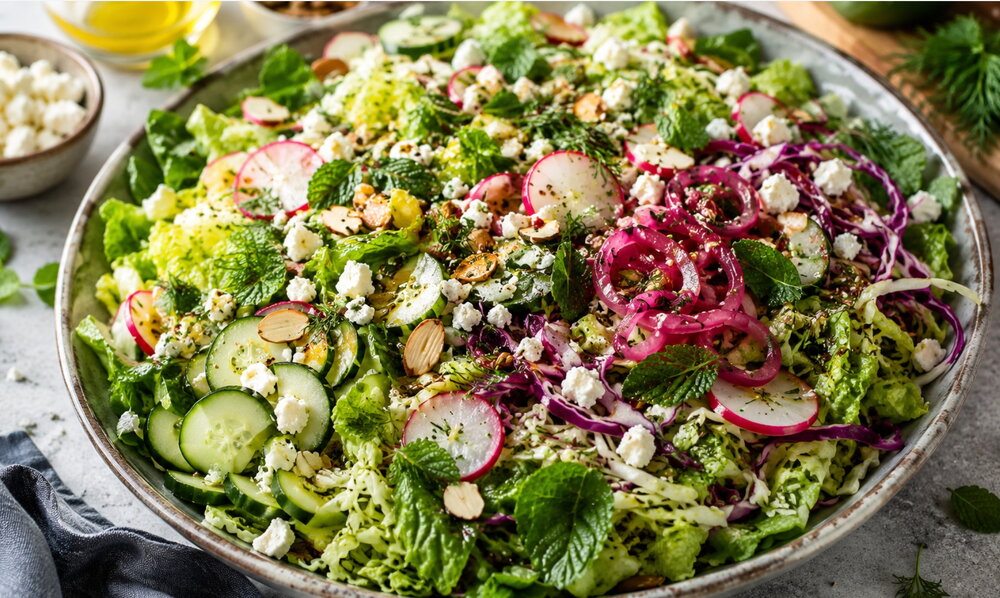
A bad salad is usually not bad because it is healthy. It is bad because it is lazy. Too much wet lettuce, not enough salt, no contrast, boring texture, weak dressing, sad toppings, and absolutely nothing that makes you want a second bite.
A great salad does the opposite.
It is cold, crisp, punchy, salty, bright, textured, and balanced. It has something fresh, something crunchy, something rich, something acidic, and something that makes the whole bowl feel like actual food instead of an obligation. The best salads are not built around restriction. They are built around craving.
That is the whole system.
Here is how to build salads people genuinely want to eat.
Rule 1: Start with Crisp, Not Just Green
The base of a craveable salad is not “lettuce.” It is texture.
That can mean romaine, little gem, cabbage, iceberg, kale massaged properly, cucumber, fennel, celery, radish, or shredded herbs. A salad gets more exciting when the base includes more than one kind of crunch.
Think less about “leafy greens” and more about what will snap, crackle, and stay lively under dressing.
The best crisp salad bases often combine:
romaine for freshness, cabbage for structure, cucumber for coolness, radish for bite, and herbs for lift.
A bowl that starts crisp already feels more alive.
Rule 2: Add Something Salty
This is where many home salads fail. They are fresh, but flat.
Salt is what wakes up raw vegetables and makes dressing taste complete. You can get that from actual seasoning, but also from ingredients that naturally carry savoriness: feta, olives, parmesan, capers, anchovies, halloumi, roasted nuts with salt, or even seasoned croutons.
A craveable salad nearly always has one salty moment that keeps the whole thing from tasting polite.
Rule 3: Acid Is Not Optional
If a salad does not have enough acid, it tastes unfinished.
Lemon juice, lime juice, vinegar, pickled onions, pickled cucumber, sumac, mustardy vinaigrette, or yogurt dressing with enough tang all do the job. Acid sharpens everything. It makes herbs smell fresher, greens taste cleaner, and richer toppings feel balanced.
The dressing does not have to be aggressive. It just has to actually show up.
Rule 4: Every Great Salad Needs Contrast
This is the secret that makes people keep eating.
Good salads are rarely built from one texture and one temperature. They work because they have contrast:
cold vegetables with warm chicken, crisp lettuce with creamy avocado, crunchy cabbage with soft beans, juicy tomatoes with salty cheese, fresh herbs with roasted vegetables, sharp pickles with sweet fruit.
That push and pull is what makes a salad feel exciting rather than worthy.
Rule 5: Use Fat to Make It Satisfying
People often talk about salads as if richness is the enemy. It is not. Richness is part of what makes a salad feel complete.
That can come from olive oil, avocado, tahini, nuts, seeds, cheese, yogurt dressing, egg yolk, roast chicken, salmon, or a spoonful of hummus worked into the plate. Fat rounds out bitterness, helps dressing cling, and gives the salad actual staying power.
Without some richness, a salad can taste like garnish.
Rule 6: Crunch Should Be Intentional
Crunch is not a bonus. It is structural.
You want something that stays crisp even after dressing hits the bowl. That might be toasted seeds, nuts, crisp chickpeas, croutons, tortilla strips, roasted peanuts, fried onions, or raw vegetables cut properly.
The best salads usually have more than one kind of crunch:
fresh crunch from vegetables, and toasted or roasted crunch from toppings.
That layered texture is what makes them craveable.
Rule 7: Dress Properly, Not Excessively
Too little dressing and the salad tastes dry and disconnected. Too much and it collapses into wet sadness.
The goal is coating, not drowning.
A good method is to dress the sturdy ingredients first, then fold in delicate leaves or herbs last. That way the flavor gets distributed without bruising everything into submission. If the salad contains cabbage, kale, or chopped romaine, it can handle more assertive dressing. If it contains soft leaves, it needs a lighter hand.
The dressing should make the salad shinier, brighter, and more fragrant — not swampy.
The Crisp Salad Formula
A salad people crave usually includes these five parts:
1. Crisp base
Romaine, cabbage, cucumber, fennel, celery, radish, little gem, herbs.
2. Salty element
Feta, olives, parmesan, capers, anchovy, halloumi, salted seeds.
3. Rich element
Avocado, olive oil, tahini, cheese, egg, nuts, chicken, salmon.
4. Crunch element
Croutons, toasted nuts, seeds, roasted chickpeas, fried shallots, raw snap vegetables.
5. Sharp finish
Lemon, vinegar, pickles, mustard, yogurt tang, sumac, fresh herbs.
Once all five are in place, the salad starts tasting like a real dish.
Salad Combinations That Actually Work
The crunchy chopped salad
Romaine, cabbage, cucumber, tomato, red onion, feta, olives, crisp chickpeas, lemon-oregano dressing.
This works because it is cold, salty, crunchy, and highly scoopable.
The roast-and-fresh salad
Peppery greens, roasted carrots, toasted almonds, goat cheese, herbs, mustard vinaigrette.
This works because warm and cool ingredients make the bowl feel more dynamic.
The creamy-crisp salad
Little gem, avocado, cucumber, spring onion, toasted seeds, grilled chicken, lime yogurt dressing.
This works because the creamy element softens the sharpness without killing freshness.
The cabbage-led salad
Shredded cabbage, carrot, herbs, roasted peanuts, pickled onion, sesame-lime dressing.
This works because cabbage stays crisp longer than delicate lettuce and carries bold dressing beautifully.
The salty-herby salad
Tomatoes, cucumbers, parsley, mint, radish, feta, olives, red wine vinaigrette.
This works because herbs and salt make everything taste more vivid.
Ingredients That Instantly Improve Salad
A few ingredients do an unreasonable amount of work:
Pickled onions make almost any salad better.
Fresh herbs make it smell alive.
Toasted nuts or seeds add depth and crunch.
A proper squeeze of lemon wakes up everything.
Parmesan, feta, or olives add savoriness fast.
Cucumber and radish make a salad feel colder and sharper.
Warm protein makes it feel like dinner.
These are small additions, but they change the whole mood of the bowl.
The Biggest Salad Mistakes
The first is using watery ingredients without balancing them. Too many tomatoes or badly dried greens dilute flavor fast.
The second is forgetting seasoning. A salad with no salt is nearly always disappointing.
The third is having no texture contrast. Soft lettuce, soft avocado, soft dressing, soft toppings — that is how you get boredom.
The fourth is treating dressing like an afterthought. A strong salad can survive many things, but not a weak dressing.
The fifth is building for virtue instead of pleasure. If the salad does not have acid, crunch, salt, and richness, people will notice.
How to Make Salad Feel Like a Meal
If you want a salad people genuinely crave for lunch or dinner, give it structure.
Add grilled chicken, boiled eggs, salmon, beans, lentils, halloumi, steak strips, tofu, or chickpeas. Add a richer dressing or a spoonful of something creamy. Keep the vegetables crisp. Keep the seasoning confident. Keep one element warm if possible.
That is how a salad stops feeling like a side issue and starts feeling like the main event.
Final Toss
The best salads are not random piles of good intentions. They are built on a system: crisp base, salt, acid, richness, crunch, and contrast. Once those pieces are in place, the bowl starts working harder. It tastes brighter, feels more satisfying, and makes people want another forkful instead of politely pushing leaves around.
Because a salad people crave is not about being virtuous.
It is about being impossible to stop eating.