
Stir-Fry Like a Pro: Heat Control, Sauce Ratios & No-Soggy-Veg Tips
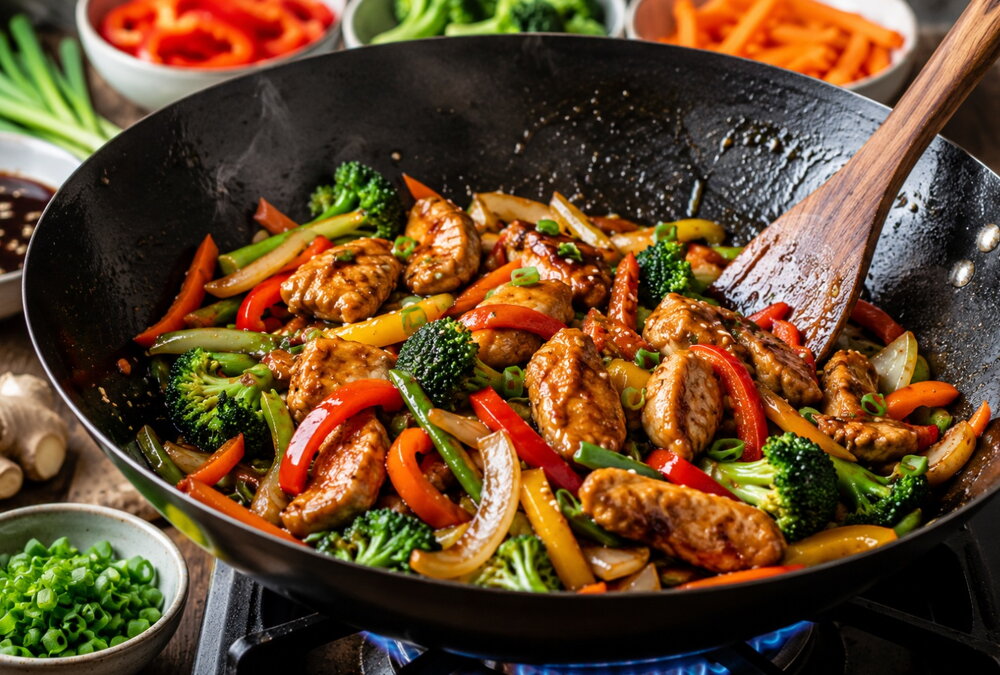
A good stir-fry feels effortless when you eat it and extremely unforgiving when you cook it badly. The vegetables go watery, the pan gets crowded, the sauce turns everything soupy, the protein overcooks, and somehow dinner tastes both greasy and underwhelming at the same time.
But a great stir-fry is one of the smartest meals you can make. It is fast, high-impact, deeply flavorful, and built around contrast: crisp vegetables, glossy sauce, hot pan, tender protein, and just enough char to make everything feel alive.
That is the real secret. Stir-fry is not about random speed. It is about control.
Here is how to stir-fry like a pro: manage heat properly, use sauce ratios that actually work, and keep your vegetables crisp instead of sad.
What Makes a Good Stir-Fry?
A strong stir-fry usually gets five things right.
The pan is hot enough.
The ingredients are prepped before cooking starts.
The sauce is balanced, not dumped in blindly.
The pan is not overcrowded.
The vegetables stay bright and crisp instead of steaming into surrender.
Once those five things are under control, stir-fry becomes much easier.
Rule 1: Prep Everything First
Stir-fry is not forgiving if you are still slicing onions while the garlic burns.
Before the pan even goes on the heat, have the vegetables cut, the protein seasoned, the sauce mixed, and the aromatics ready. Stir-fry cooking happens quickly, so the success comes from what you do before the first drop of oil.
That means:
slice vegetables by cooking speed,
cut protein into even pieces,
mix the sauce in a bowl,
keep garlic, ginger, and spring onion ready,
and have a plate nearby for cooked ingredients if you need to work in stages.
This is one of those dishes where mise en place is not chef drama. It is survival.
Rule 2: Heat Matters More Than People Think
Most soggy stir-fry starts with a pan that was never properly hot.
You want the pan hot enough that ingredients sizzle the second they hit the surface. If the pan is only gently warm, the vegetables start releasing water before they can sear, and the whole thing turns into a steam bath.
A wok is great, but a wide frying pan or sauté pan can also work well if it holds heat properly. The point is not the name of the pan. The point is surface heat plus room to move.
Let the pan heat first. Then add oil. Then add the first ingredient.
Not oil in a cold pan.
Not vegetables into a lukewarm surface.
Heat first.
Rule 3: Don’t Crowd the Pan
This is the biggest stir-fry mistake in home kitchens.
Too much food in the pan at once lowers the temperature immediately. The ingredients stop frying and start steaming. That is how you get pale onions, floppy peppers, damp broccoli, and a watery puddle where the sauce should have been.
The fix is simple: cook in batches when needed.
That might mean:
protein first, then out,
vegetables second,
everything back together at the end with the sauce.
Yes, it is one extra plate.
No, it is not more annoying than eating soggy stir-fry.
Rule 4: Cook Protein and Vegetables Separately When Needed
Protein and vegetables usually do not want the same timing.
Chicken, beef, tofu, or shrimp often need a different amount of time than broccoli, peppers, mushrooms, or snap peas. When everything goes in together, either the protein overcooks or the vegetables collapse.
A much better method is:
cook the protein first until nearly done,
remove it,
stir-fry the vegetables,
then return the protein at the end with the sauce.
This gives you better browning, better texture, and more control over everything.
Rule 5: Learn the Sauce Ratio
A stir-fry sauce should be balanced enough to coat the food, not drown it. Too much sauce turns the pan wet. Too little and everything tastes disconnected.
A simple reliable formula is:
2 parts salty + 1 part acid or sweetness + 1 part body + a little liquid + a little thickener
That can look like:
2 tablespoons soy sauce
1 tablespoon oyster sauce or hoisin or another flavor base
1 tablespoon rice vinegar, lime juice, honey, or brown sugar depending on direction
2 to 4 tablespoons water or stock
1 teaspoon cornstarch
That is your basic structure. Then you adjust the personality.
For savory stir-fry
soy sauce + oyster sauce + stock + cornstarch
For brighter stir-fry
soy sauce + rice vinegar + touch of honey + water + cornstarch
For sweeter sticky stir-fry
soy sauce + hoisin + honey + water + cornstarch
For spicy stir-fry
soy sauce + chili paste + little sugar + water + cornstarch
The cornstarch matters because it helps the sauce turn glossy and cling instead of running to the bottom of the plate.
Rule 6: Use Cornstarch Properly
Cornstarch can make a stir-fry feel polished, but it has to be used correctly.
Always mix it into cold liquid first before adding it to the pan. If you throw it straight into hot ingredients, it clumps and behaves badly.
You can also use a little cornstarch on protein before cooking, especially chicken or beef. That helps protect moisture and gives the protein a softer, restaurant-style texture.
Just do not go overboard. The goal is silkiness, not glue.
Rule 7: Vegetables Need Different Timing
Not all vegetables belong in the pan at the same moment.
Hard vegetables need a head start. Tender ones need less time. Watery ones need caution.
A simple order looks like this:
First: carrots, broccoli stems, green beans
Next: broccoli florets, mushrooms, peppers, onions
Last: snap peas, cabbage, bean sprouts, spring onions, leafy greens
If you treat everything as equal, the pan will punish you.
The best stir-fry vegetables usually still have some bite. They should be hot and glossy, not limp and tired.
Rule 8: No Soggy Veg Means Less Moisture
Vegetables release water. Some release a lot.
Mushrooms, courgette, cabbage, and bean sprouts can all flood the pan if used carelessly. That does not mean never use them. It means be strategic.
Use high heat.
Do not overcrowd.
Cook wetter vegetables in smaller amounts.
Do not salt too early if you want firmer texture.
And do not add sauce before the vegetables have already had a chance to fry.
Sauce added too early is one of the fastest ways to lose crispness.
Rule 9: Aromatics Go In Briefly, Not Forever
Garlic, ginger, and chili should wake the oil up, not burn into bitterness.
Usually they go in after the pan is hot and just before or just after the main ingredients, depending on the recipe. They need seconds, not ages.
If garlic turns dark brown, the whole stir-fry can take on a bitter edge. Keep it moving and keep the timing short.
Spring onion is useful in two stages:
the white part early for flavor,
the green part at the end for freshness.
Rule 10: Use Oil With a Purpose
You need enough oil to help heat move around the pan and keep ingredients from sticking, but not so much that the dish turns greasy.
Neutral oils with a higher smoke point usually work best for the main cooking. Sesame oil is better as a finishing flavor than the main frying oil because its aroma is strong and it can catch too much heat.
Think of oil as part of the cooking system, not just lubrication.
Rule 11: Sauce Goes In Near the End
A good stir-fry sauce is usually the last main step, not the first.
Once the protein and vegetables are almost done, return everything to the pan, give the sauce a final stir, then pour it in and toss quickly. It should bubble, thicken lightly, and coat everything in a glossy layer.
This should take a minute or two, not ten.
If the sauce sits too long, vegetables soften too much and the glaze loses that fresh, lively feel.
Rule 12: Finish Strong
The final details matter more than people think.
A squeeze of lime can wake everything up.
A little sesame oil can deepen aroma.
Spring onion adds freshness.
Toasted sesame seeds add texture.
Chili crisp or crushed peanuts can change the whole mood.
A stir-fry often needs one small finishing move to taste complete instead of merely cooked.
Best Stir-Fry Protein Options
Chicken thigh is one of the easiest because it stays juicy and handles strong heat well. Beef works beautifully when sliced thinly. Shrimp is fast and excellent but easy to overcook. Tofu is best when dried well first so it can actually brown instead of steaming.
If you are new to stir-fry, start with chicken thigh or firm tofu. They are both forgiving and versatile.
Best Vegetable Combos
A few combinations work especially well because they balance color, moisture, and cooking time.
Broccoli, carrot, and red pepper is a classic because it gives crunch, sweetness, and color.
Mushroom, cabbage, and spring onion works well for a more savory stir-fry.
Green beans, peppers, and onions give a very clean, crisp result.
Snap peas, carrot, and baby corn are great for a fresher, lighter version.
Try to mix sturdy vegetables with one or two quicker ones, not six watery vegetables all at once.
Common Stir-Fry Mistakes
The first is using a pan that is not hot enough.
The second is overcrowding.
The third is adding too much sauce.
The fourth is cutting vegetables without thinking about timing.
The fifth is trying to stir constantly instead of letting ingredients actually touch the hot pan.
A stir-fry should move, yes. But it also needs moments of contact with heat to build flavor.
A Reliable Stir-Fry Formula
If you want a simple blueprint, use this:
1 protein + 3 vegetables + 2 aromatics + 1 balanced sauce + 1 finishing touch
For example:
chicken thigh
broccoli, carrot, red pepper
garlic and ginger
soy-oyster-cornstarch sauce
spring onion at the end
That is enough structure to make dinner feel organized without making it rigid.
Final Toss
Good stir-fry is not about chaos and speed for the sake of it. It is about heat, timing, and restraint. A hot pan, prepped ingredients, a balanced sauce, and the discipline not to crowd everything into one soggy mess.
That is how vegetables stay crisp.
That is how the sauce goes glossy instead of watery.
That is how stir-fry tastes like real cooking instead of fridge-cleanout panic.
Because once you control the pan, the whole dish gets better.