
Plantain: Ripe vs Unripe — The Science of Sweetness, Texture & Best Uses
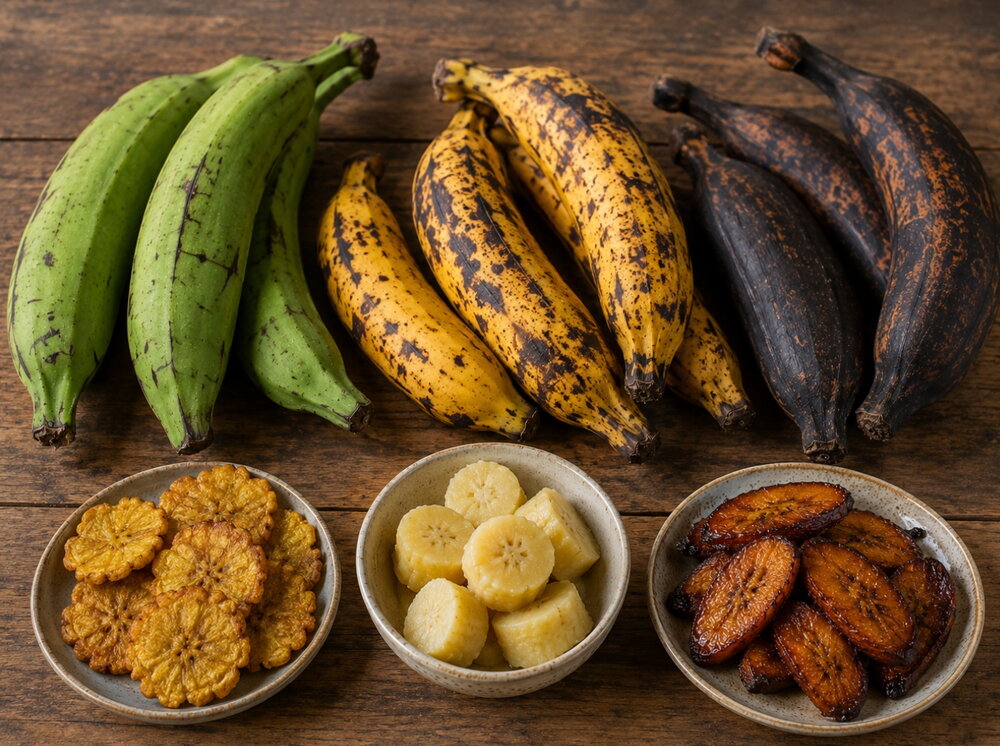
Plantain is one of the most versatile ingredients in the kitchen because it changes personality completely as it ripens. Green plantain behaves almost like a starch. Yellow plantain starts leaning sweet. Very dark plantain becomes soft, sugary, and caramel-prone. In practical cooking terms, that means ripe and unripe plantains are not interchangeable — they solve different problems on the plate.
The reason is food science, not just tradition. As plantains ripen, starch is gradually converted into sugars, and the flesh softens. Unripe plantains therefore taste firmer, starchier, and less sweet; riper plantains taste softer and sweeter and brown more readily when cooked. Plantain-specific research and broader banana ripening research both describe this same core pattern: starch goes down, simple sugars go up, and texture softens as ripening progresses.
The Core Difference: Starch vs Sugar
Unripe green plantains are high in starch and comparatively low in sugar, which is why they behave more like potatoes than dessert fruit in the pan. University of Minnesota Extension describes green plantains as starchy and potato-like, while Britannica notes that plantains have the most starch before ripening and are usually cooked green in savory dishes.
As the fruit ripens, that starch breaks down into sugars. Plantain research notes that mature or riper plantains have lower starch and higher simple sugars than green-stage plantains, and food-science reviews connect that starch-to-sugar shift to softening during ripening.
That one change explains almost everything else:
- why green plantains stay firm,
- why ripe plantains brown faster,
- why ripe plantains taste sweeter,
- and why the best cooking method changes with color.
Unripe Plantain: Firm, Starchy, Structured
Green plantains are hard, dense, and low-sweetness. BBC Good Food describes them as hard, earthy, and very starchy, with no real hint of sweetness yet. Because of that, they hold their shape well and can take aggressive cooking without collapsing.
This is why unripe plantain is best when you want structure:
- tostones or twice-fried plantain,
- chips,
- boiled plantain,
- mashed plantain,
- plantain used as a starchy side,
- plantain sliced into soups or stews.
Those uses line up with extension and culinary guidance that green plantains are best fried, boiled, mashed, or used the way you would use a sturdy starch.
What green plantain does well
Green plantain fries crisp rather than jammy, boils into something solid rather than soft-sweet, and mashes into a savory, body-giving starch. It is the right choice when you want a clean shape, chew, and backbone rather than caramelization. That is why it works so well for chips, tostones, fufu-adjacent or mashed preparations, and soup applications.
Ripe Plantain: Softer, Sweeter, Better at Browning
As plantains turn yellow, then spotted, then very dark, they become sweeter and softer. University of Minnesota Extension says yellow plantains are sweeter than green ones and good grilled or baked, while black or nearly black plantains are very sweet and best suited to desserts. Britannica similarly notes that ripe plantains are mildly sweet.
Because the starch has been converted further into sugars, ripe plantains brown more easily and develop those caramelized edges people love. BBC’s plantain guide notes that the yellow stage gets sweeter and softer, and culinary references consistently point to frying, baking, roasting, or grilling as especially good matches for riper fruit.
What ripe plantain does well
Ripe plantain is best when you want:
- caramelized edges,
- a soft center,
- sweetness that can balance salt or spice,
- dessert potential,
- or that classic sweet-savory contrast beside beans, eggs, grilled meat, or pepper sauces.
This is the stage for dodo-style fried ripe plantain, baked sweet plantain, grilled plantain, and sweeter casseroles or desserts.
Texture Science: Why the Mouthfeel Changes So Much
The texture shift is not random. Green plantain feels tighter and drier because the flesh is still dominated by starch. As ripening continues, the starch breakdown and softening make the flesh feel more tender and less rigid. Reviews of banana and plantain ripening tie sugar formation directly to fruit softening, and plantain-specific work notes that even ripe plantains still retain relatively high starch compared with dessert bananas, which is part of why they stay more cooking-friendly than ordinary bananas.
So if you are wondering why:
- green plantain slices cleanly,
- yellow plantain bends more easily,
- and black plantain can feel almost custardy once cooked,
the answer is that ripening has changed the starch-sugar balance and the firmness of the flesh.
The Middle Stage Is the Most Underrated
There is a very useful middle stage that many cooks rely on instinctively: yellow plantain with some brown spotting. It is not as savory-starchy as green plantain, but not yet as soft and dessert-sweet as very dark plantain. University of Minnesota’s stage guide reflects this progression clearly: green for starchy cooking, yellow for sweeter grilled or baked use, black for very sweet applications.
This middle stage is ideal when you want balance:
- sweet enough to brown nicely,
- firm enough not to collapse,
- good for pan-frying,
- strong with eggs, beans, rice, and spicy sauces.
If green plantain is about structure and black plantain is about sweetness, yellow-with-spots is about versatility.
Best Uses by Stage
Use green plantain when you want:
- crispness,
- chew,
- mashable starch,
- soup or stew structure,
- less sweetness.
Best examples: chips, tostones, boiled plantain, mashed plantain, plantain in soup, starch-forward savory dishes.
Use yellow or lightly spotted plantain when you want:
- some sweetness,
- some firmness,
- better browning,
- a side dish that works with savory mains.
Best examples: pan-fried plantain, grilled plantain, baked plantain, breakfast plantain, side dishes with eggs or beans.
Use very dark or black plantain when you want:
- maximum sweetness,
- the softest texture,
- dessert energy,
- deep caramelization.
Best examples: very sweet fried plantain, baked desserts, mash-sweet applications, sweet breakfast sides.
Why Ripe Plantains Brown Better
This comes down largely to sugar. When you fry or roast ripe plantain, the higher sugar content encourages better browning and caramelized flavor. Green plantain can still brown, but it behaves more like a starch crisping at the edges than a sweet fruit caramelizing. That is why fried ripe plantain gives you golden, sticky-edged sweetness, while green plantain gives you crisp, savory bite.
In plain kitchen language:
- green plantain crisps,
- ripe plantain caramelizes.
That is the shortcut.
What About Nutrition and Blood Sugar?
There is a useful nutritional distinction here too. Plantain research shows that green-stage products tend to be richer in resistant starch, while ripening increases rapidly available sugars. Plantain-specific studies on digestibility and glycaemic response point in that direction, though exact effects vary with the variety and how the plantain is processed or cooked.
That does not mean one stage is “good” and the other is “bad.” It means they behave differently:
- greener plantains tend to be starchier and less sweet,
- riper plantains tend to taste sweeter and digest more like a sweeter carbohydrate source.
Cooking method still matters too: frying, boiling, baking, and mashing all change the final texture and eating experience.
The Biggest Plantain Mistake
The biggest mistake is choosing by color without thinking about the dish.
If you use ripe plantain where you needed firm structure, it may go too soft.
If you use green plantain where you wanted sweet browning, it may taste flat or too starchy.
The better question is not “Is this ripe?”
It is “What do I want it to do?”
That one shift makes plantain much easier to cook well.
The Easiest Cheat Sheet
Think of it this way:
Green = starch, structure, savory use
Yellow = balance, browning, flexible use
Black = sweetness, softness, dessert use
That is the whole system.
Final Bite
Plantain is one ingredient with multiple lives. Green plantain is firm, starchy, and built for structure. Ripe plantain is sweeter, softer, and better for caramelization. Very ripe plantain is almost a different ingredient entirely: soft, sugary, and ideal when you want comfort, richness, and deep browning.
That is the beauty of it.
You are not just choosing a fruit.
You are choosing a texture, a sweetness level, and a cooking outcome.