
History and Origins of Fufu: From Akan “Fufuo” to a Pan-African Staple
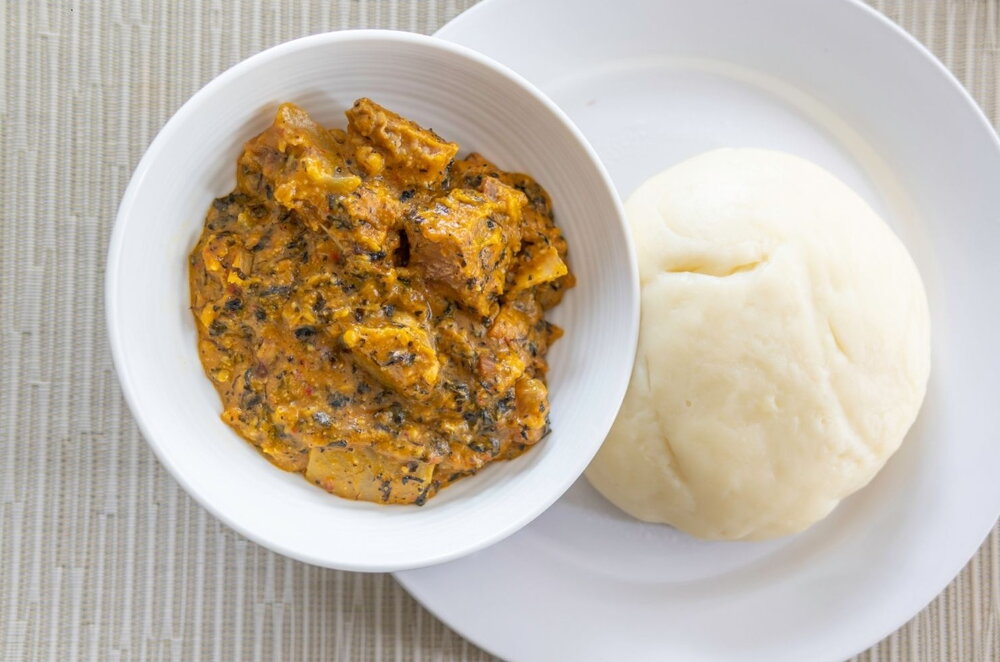
What is fufu (and why it’s so important)?
Fufu is a smooth, stretchy starch—usually rolled into a ball and eaten with soups and stews. It’s typically made by boiling starchy foods (like cassava, yam, or plantain) and pounding them until elastic and lump-free. It’s widely eaten across West and Central Africa and—through migration—also appears in Caribbean food culture.
But fufu isn’t just “a side dish.” In many homes, it’s the center of the meal: a comforting base that carries bold, spicy, aromatic soups.
The name: where “fufu” comes from
“Fufu” (also spelled fufuo, foofoo, foufou) is commonly traced to the Twi language associated with Akan communities in present-day Ghana. Many explanations translate the word as something like “mash” or “mix,” which fits perfectly with how it’s made.
You’ll also see “fufuo” used as the Twi term for the dish itself in Akan/Twi dictionaries and learning resources.
Origins: older than cassava, older than the modern recipe
One easy misconception is that fufu “started as cassava.” Historically, the technique—turning boiled starchy staples into a pounded, cohesive paste—has deep roots in West African foodways. Long before cassava was common, people were already pounding yams, plantains, cocoyams, and other local staples into forms that look and eat like what many people now call fufu.
So when people ask “Where is fufu from?” a careful answer is:
-
The name “fufu/fufuo” is strongly linked to Ghana (Akan/Twi).
-
The idea of pounded starchy “swallows” is broader and older, with close relatives across many ethnic groups and regions.
Encyclopaedia Britannica even notes that the dish is reported to have originated in Ghana, while also emphasizing its wide spread across western and central Africa.
The cassava turning point: how the 1500s reshaped fufu
Cassava changed everything.
Cassava is native to South America and was introduced to Africa via Portuguese trade routes in the 16th century (often described as coming from Brazil).
Over time, cassava’s reliability—especially as a hardy crop—helped it spread and become central to many regional staples, including many styles of fufu. The FAO describes cassava’s arrival and early adoption in Africa, including its role as a kind of “famine-reserve” crop.
This is why, in many places today, “fufu” strongly implies cassava-based dough (sometimes fermented, sometimes not), even though older versions relied more on yams/plantains/cocoyam.
How fufu spread (and why it has so many “cousins”)
As ingredients, trade networks, languages, and borders shifted, fufu became both a specific dish and a flexible category. One food encyclopedia frames “foo-foo/fufu” as a common name for West African starchy pastes made from numerous possible base ingredients.
That helps explain why you’ll find:
-
Ghana: often cassava + plantain (or other combos), pounded and served with soups.
-
Nigeria: in many contexts, “fufu” may mean fermented cassava dough (and there are other related swallows like pounded yam, eba, amala).
-
Côte d’Ivoire: related forms are often discussed as foufou/foutou, frequently plantain- or yam-forward.
-
Cameroon / Central Africa: versions exist under local names and methods, sometimes based on cassava flour or maize in certain areas.
The result: fufu is both one dish and a family of dishes—united more by texture and eating style than by a single recipe.
Fufu today: tradition, tech, and diaspora
Traditionally, pounding fufu is labor-intensive and often social—done with a mortar and pestle, sometimes with a rhythm that feels almost musical. But modern life has introduced shortcuts: fufu machines, stand mixers, and instant “fufu flour” mixes.
You can even see this in contemporary mainstream recipe coverage, which describes both the cultural importance of fufu and the growing use of easier methods and powdered versions—especially for home cooks outside West Africa.
Migration has also carried fufu beyond Africa; Britannica explicitly notes its presence in the Caribbean due to African migration.
A quick timeline (high-level)
-
Pre-1500s: Pounded yam/plantain/cocoyam-style staples exist across West Africa; the technique predates cassava.
-
1500s–1600s: Cassava is introduced to Africa through Portuguese trade routes; it gradually becomes a major staple and reshapes many dishes.
-
Modern era: Regional variations flourish; convenience methods (machines/instant mixes) expand access globally.