
Homemade Pita in a Skillet
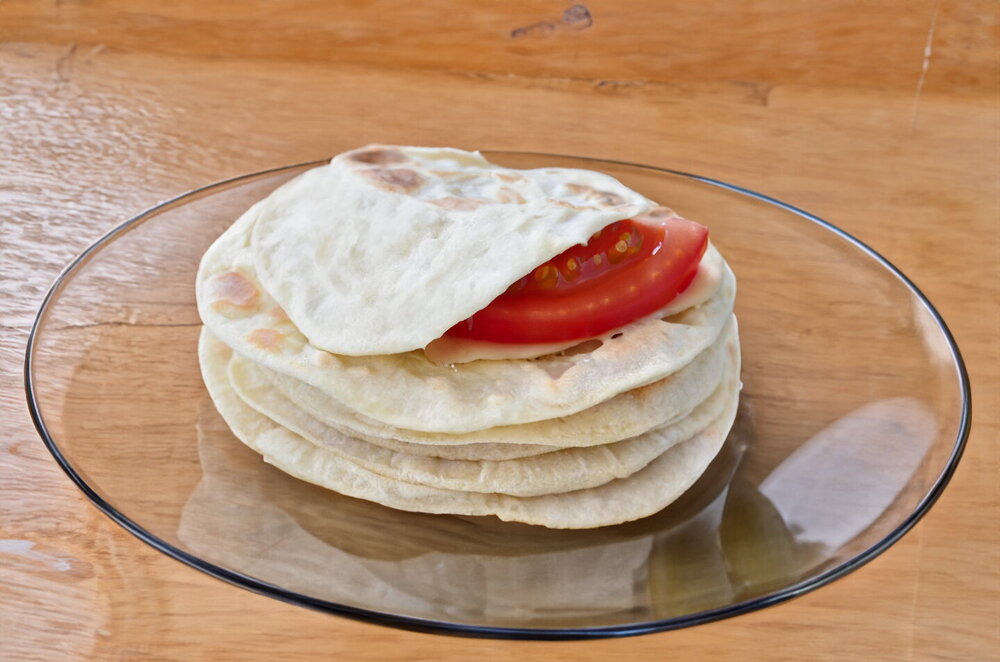
A round flatbread with a hole inside for filling. Pita tastes like lavash, but looks like a round little purse. Cooking it in a skillet feels like magic - suddenly a ball puffs up from a flat disc. Fill pita with all kinds of fillings or serve it instead of bread.
Updated : 26 February, 2026
Easy
About 1 hour.
Ingredients
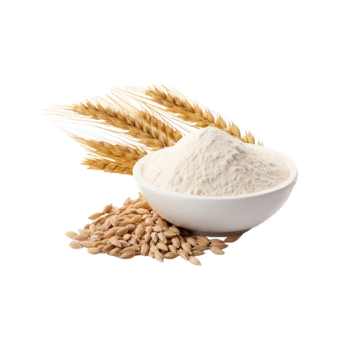
350 grams
Wheat flour
200 milliliters
Water
2 tablespoon
Vegetable oil
1 teaspoon
Salt
Table
Table of volume measurements:
- teaspoon - 5 ml
- dessert spoon - 10 ml
- tablespoon - 20 ml
- glass - 200 ml
Preparation
Step 1
How to make pita in a skillet? Take the ingredients from the list. You’ll need the amount of flour stated in the recipe plus a little extra for dusting the work surface. Use a neutral (odorless) vegetable oil.
Step 2
Take a large bowl and sift the flour into it. This aerates the flour and removes lumps. Dough from sifted flour is much more elastic, and the baked goods turn out fluffier and airier.
Step 3
Bring the water to a boil, then let it cool for 2-3 minutes to about 80°C (176°F). Add salt to the water and stir. Pour the water into the flour in a thin stream, stirring as you go.
Step 4
Immediately add the vegetable oil as well. Quickly stir the dough with a spoon, since it’s quite hot. Why do we use boiling water? Under its influence, the gluten in the flour tightens and, during baking, doesn’t let water steam escape, so voids form inside the dough. That’s how we get a “pocket” inside the pita.
Step 5
When the dough cools a little, start kneading it by hand. It will quickly come together into a ball, stop sticking to your hands, and become elastic and soft. If needed, add a little more flour - go by the dough’s consistency. Scalded dough is generally very pleasant to work with.
Step 6
Place the dough on the work surface. No need to dust it with flour. If the dough is the right consistency, it won’t stick. Knead until smooth and uniform, then shape into a ball.
Step 7
Put the ball into a bag and let it “rest” for 20 minutes.
Step 8
After the time is up, place the dough on a lightly floured surface and roll it into a rope. Divide into 8 equal pieces. Each piece will weigh about 70-80 g (2.5–2.8 oz).
Step 9
Roll each piece into a ball.
Step 10
Cover the balls with a bag so the dough doesn’t dry out. Take one ball and carefully roll it into a thin round flatbread (about 3-5 mm / 1/8-3/16 in) with even edges. If it’s too thick, it may not bake through inside. Make sure the dough doesn’t tear and doesn’t stick - damaged flatbread won’t puff up while baking. The finished round should be 15-17 cm (6-6.7 in).
Step 11
Heat a skillet very well - best if it has a thick bottom and a good nonstick surface (so the flatbread won’t stick). Place the flatbread on the skillet. No oil is needed - pitas are cooked in a dry pan. When the first bubbles appear on the surface, flip the flatbread. This happens quite quickly. Fry on medium heat, sometimes slightly above medium, depending on your pan and stove.
Step 12
Keep the flatbread on the other side for about 1 minute.
Step 13
Flip again. Right before your eyes, the flatbread will start to puff up. Wait until it stops rising, then flip to the other side again. It’s important to flip pita twice on each side so it bakes through well. After about 30 seconds, the pita is ready - remove it from the skillet.
Step 14
Cook the remaining flatbreads the same way. Finished pitas deflate fairly quickly - this is normal; the inner cavity will still remain.
Author note
Share the recipe


